Try the Spirits
Weighing the unseen — every spirit tested against the Word.
“Beloved, believe not every spirit, but try the spirits whether they are of God: because many false prophets are gone out into the world.”
1 John 4:1 · KJV
“For by him were all things created, that are in heaven, and that are in earth, visible and invisible, whether they be thrones, or dominions, or principalities, or powers…”
Colossians 1:16 · KJV
We answer real questions about the unseen — hauntings, the occult, UFOs and the high strange, near-death experiences — with the best reporting on the beat, and then we weigh what it means in the light of Scripture.
The reporting and the weighing are kept visibly apart, so you can check the facts and leave the rest. We think you will come back for the facts. We are not hiding what we believe, and we are not going to pretend the question underneath is anything other than a religious one.
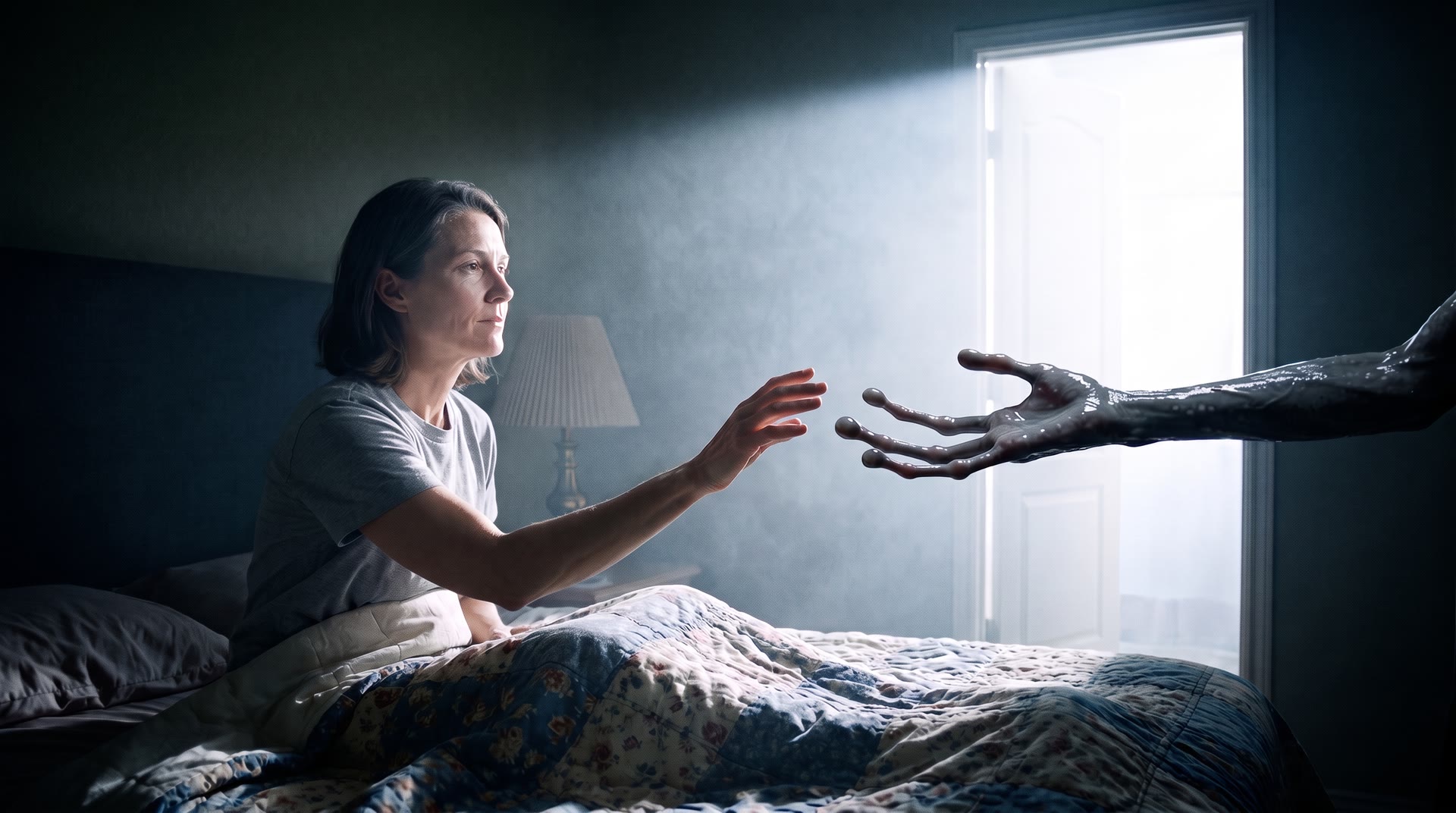
She Went Aboard Every Night by Choice. Then They Came Back for Her.
A woman lay in her own bed in Austin, Texas, and could not move a finger. Something like a net lay over the whole length of her. Her mouth would not open. The bed was shaking violently under her, *like a scene out of The Exorcist.* She was wide awake, and she knew exactly who it was. For years she had gone with them every night, by her own choice. They had told her they were the angels of God. This was what came for her after she stopped going. To understand what they were, you have to start with another woman, on a hillside in 1973, who made the same choice. ## The star that moved Sarah never bought what the church told her. *If God went to church, I didn't see him there.* So she went looking for the truth somewhere else: astrology, numerology, then palmistry and the tarot. Witchcraft came later. One night in 1973 she was sitting on a hillside with friends when one of them, Marsha, pointed at what Sarah took for a star. The star moved. Slowly at first, then, in the blink of an eye, it was gone. Marsha's cousin had shown her one once, Marsha said, and now she saw them all the time. It was not long before Sarah did too. > I was hooked, something wonderful was happening and I was part of it. The ships came so reliably that she and Marsha began driving unsuspecting friends out to desolate places in the middle of the night, just to watch their faces. Some liked it. Some did not. One night at a power plant a huge, silent, glowing red ship hung right over the car. Twinnie, one of Marsha's friends, opened the door and ran. They found her later, still running, and took her home. She never came out with them again. ## The ghost at the bend One of Sarah's grateful friends decided to return the favour. Would she like to meet a ghost? They parked at a sharp bend in the road. Sarah felt it get into the car with them. Her flesh felt like it was coming off her bones, and the hair on her arms stood on end. Richie said, *"He's here."* A few nights later they went back, and this time it came all the way in. It passed through Sarah's body and looked out of her eyes. *Be calm,* she told herself. *Don't let it know you're scared.* After about a minute it left. She decided she was never going back there. That night she lay in bed with her eyes closed and began to hear breathing. Faint at first, then louder, then louder. She reached for the picture of Christ on her dresser. As her hand closed on the frame, the bottle standing beside it was hurled at her face and struck her in the forehead. She saw stars. The breathing stopped. In the morning there was a perfect black-and-blue circle in the middle of her forehead. Not long after, she found a book on witchcraft in the library, which said a spell needed only the name of a demon and an order. In the back of a driving-school classroom she tried it once: *if this thing is real, make that guy in the front seat twitch.* He nearly fell on the floor. She never cast another spell. But for the first time she started to think about God. ## Seventy-five feet away In 1974 she hitched a ride to her best friend Mary's house on a hill. Nobody was home. She sat down in a lawn chair to wait, with Mary's dog, Corky, beside her, and dusk coming in. A craft set down without a sound in the field, seventy-five feet in front of her. Her first thought was: *this doesn't look right.* It was not a silver saucer. It was shaped like a top, flared at the bottom, maybe fifteen feet across and not much taller, the rusty colour of weathered steel. It stood on a tripod. A railing ran round its middle, and three lights made a triangle near its peak. Across the centre was writing she could not read. It looked like Greek: a small backward *e*, an *o* with a line through it. > What the hell is Greek writing doing on this thing? Then she heard the weeds moving toward her. Something was coming through the grass, and she could not see it. The dog did nothing. Then there was a man standing beside the ship, guiding her in. Tall, handsome, shoulder-length wavy brown hair, a tan jumpsuit-type uniform with a tag sewn on it. Exactly the kind of man she would have been attracted to. And all she could think, looking at him, was: *what is someone from the government doing here?* This doesn't look right. She remembers nothing of going in, and nothing of coming out. The next thing she knew she was standing where she had started, and a second, identical ship hung to her right. She was sad. She wanted to go with them. > I was told that I was one of them, that I was to help people to understand who they were, and to help others accept them. The first ship lifted. Under it were three large, glowing red circles, one of them sputtering as if it were having trouble. She said, *"Bye."* And for the first and only time, a sound came back: one *bleep.* The two ships flew side by side and became two brightly lit triangles, and the triangles circled each other in a stream of rainbow colour until they became one, and flew off. Not a minute later Mary pulled in. She did not believe a word of it. ## "I brought many others" For weeks Sarah could think of nothing else. She filled journals: mandalas she got lost inside, drawings of beings and ships and other worlds, pages of questions and answers about why we are here. *My mind was in communication with them.* > I felt special. The ships followed her now. They appeared when she chose to be with them, and her friends were amazed. She graduated, moved away, and showed the ships to her new friends too. *I believe the purpose of our relationship was to teach me about them, and bring others to them, and I did. I brought many others.* One of them was Connie, who was married with a ten-year-old daughter. The two women would drive out at night, park somewhere secluded and wait. One night they came home late from watching a ship and found two furious men waiting up for them. *Where were you? What were you doing?* The women laughed it off. Nobody looked at the clock. Then Connie began seeing them on her own. One night a ship hung over her car, and she said a woman was looking out of a porthole at her. Connie got out and ran, and left the car running in the middle of the road. Her husband, who did not believe in UFOs, had to walk out and fetch it. One evening at Connie's place in the country, Sarah said, *"Let's go out in the yard. I think they're here."* Connie said no. Her daughter said, *"I'll go."* At the end of the yard they looked up, and it was right above them, glowing bright and hovering without a sound. Then came the roar of a helicopter, coming in fast. The ship glided away. Sarah pulled the girl down into the weeds as the helicopter hung over them, its searchlight sweeping the grass right beside where they lay. Then it shot off after the ship. *Who could have been flying that helicopter?* She was glad they were not seen. ## "That's Satan" A friend named Diana asked Sarah to church one evening. It was nothing like the church she grew up in. It felt peaceful. Walking out afterwards, she and Diana told the woman beside them about the UFOs. The woman stopped walking. > That's Satan. It's a deception. Sarah did not want to believe her. Over the next few days, she did. She had been used, and she had never seen it coming. *I just didn't see that my friends in high places had an agenda to destroy me.* She began reading the Bible. Then one evening, with the television on, she saw a ship in the distance, coming toward her house. She walked to the window and stared at it. > I know who you are, Satan. The ship flashed a blinding light into her eyes, and left. *That was the last I ever saw of them. They've never returned.* It was over for Sarah. For another woman, years later, it was only beginning. ## Every night, by choice Lynne lived in Austin, Texas. Unlike a lot of people who say they were taken, she went aboard *totally awake and conscious*, and she let them take her every night. She remembers all of it, and not one night of it was bad. They told her they were the angels of God, and she believed them. Then she found her way back to the Lord Jesus Christ. She repented and stopped all communication with the beings. She started reading her Bible and asked God to show her the truth, *no matter how ugly it was.* And part of her still half believed they were good. *They just had to be.* ## The first night against her will One night she woke and could not move any part of her body. It felt like a dream, and she knew it was not. Arms all over her. Her mouth was glued shut. She could not scream. > It took all I had from the bottom of my soul to call out the name of Jesus Christ and claim the blood of Jesus. The attack stopped that instant. And the very first time they tried to take her, she knew who they really were, and that they were angry. *Because I used to go with them willingly.* About two weeks later she was pulled out of her body, and went nowhere. There was no time to say anything. She knew Jesus was with her. ## The net About two weeks after that, they came again. Not arms this time: a net of some kind, over the whole of her. She could not move. The bed was shaking violently under her, like a scene out of *The Exorcist*, and her mouth would not open. And somehow, through the paralysis of her mouth, she screamed: > By the blood of Jesus Christ! The attack stopped. The restraints just melted away. She woke herself up screaming the name. A couple of days later she called the friend who had first told her she was on the wrong side, and the friend told her how to pray. After that the attempts stopped completely. Lynne was baptised. ## One crystal Then a man with a live show on American Voice Radio asked her to tell her story on the air for the whole month of October. She said yes. A couple of days later, driving to work into the sun, she topped a hill and the windshield went completely white. She could not see one thing in front of her. She hit the median and wrecked the car. The day she got it back was the day of her first interview, and she got thirty minutes on the air instead of an hour. All month there was technical trouble with the sound and the broadcast. Halfway through October, at her mother's house, she woke up paralysed again. She claimed the name of Jesus Christ, and it stopped immediately. Then she found out how they had got back in. Hidden behind some things at her mother's was one crystal from her New Age years: the one she thought she had destroyed with all the rest. *I knew they connected through the crystal somehow.* > What I was involved with in the UFOs, taking pictures of UFOs, communicating, was the most vile evil thing I had ever come into contact with in my life. ## In her own words > They were not the angels of God, as I was told by them that they were. They were not nice, caring beings as I had thought they were. The authority of our Lord Jesus Christ can stop them from taking me immediately.
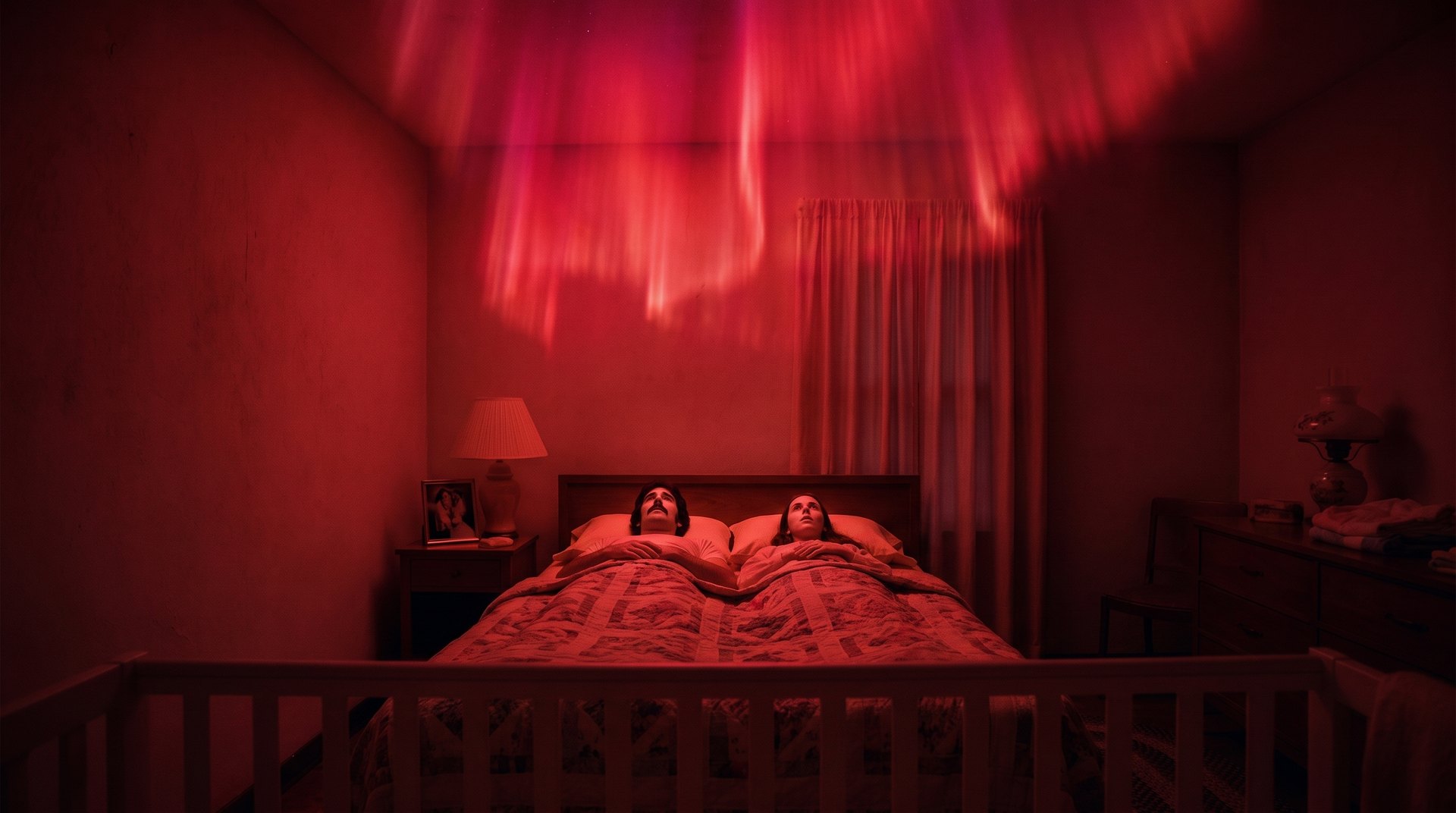
Four Hundred Abductions Stopped at One Name. The Researchers Kept It Off the Record.
A man was held in the air over his own bed, and the thing holding him there was laughing. He said one name, and it squealed like something in pain and let him go. Two UFO investigators recorded him telling it in his own living room, and then did not listen to the tape for six months. When they finally did, it sent one of them to the top abduction researchers in the country, one at a time. **Every one of them asked to go off the record. And off the record, every one of them said they had cases like it too.** Not one had ever written a single one down. ## The night over the bed Bill cleaned buildings on a contract at the Kennedy Space Center and lived in Christmas, Florida, where the woods run right up to the house. One Friday evening he saw lights through the living-room window, low over the trees to the north. He figured it was a police helicopter and went to bed beside his wife. The dogs would not settle. Three times he got up to quiet them. The third time he lay back down, he could not move. The room went grey in front of his open eyes, like a fog. Then he came up off the mattress, with a pain from behind, as if something were pushing him up into the air and holding him there. His wife slept on beneath him. He was screaming and nothing came out. And whatever held him was laughing, as if it were enjoying itself. Bill was not a religious man. He thought the devil had him. The only thing he could think of to say was a name. > Jesus. Jesus, help me. He could never say afterwards whether he spoke it or only thought it. But in that instant something hurt the thing holding him. He heard it squeal, in pain, and it let him go. He hit the bed so hard his wife woke up and asked him why he was jumping on the bed. He told nobody for years. ## The red light over the crib In the fall of 1976, in West Plains, Missouri, Dan and Joyce Ahrens were just starting out. Their son was three. Their baby daughter had just turned one and slept in a crib at the foot of their bed. They had gone to bed and were both still awake when a red light, four or five feet wide, came across the ceiling. It moved the way the northern lights move, and it settled over the crib. Dan thought there was a fire outside. He tried to shout to Joyce and nothing came out. He could not move. Joyce, lying on her right side, could not feel her body at all. The only thing she could move was her eyes. In her head she was screaming for Dan to help her. She did not know he was frozen too. Then the light went out, and both of them sat straight up in the same instant. Dan pulled the curtain back. *What the hell was that?* Joyce said, *I don't know.* The baby was standing up in her crib, her eyes huge. They went back to sleep, and did not speak about it again for sixteen years. But from that year on, Joyce found her son in the mornings anywhere but his bed: in a closet, under a chair, under a table, as if he were hiding from something. Her daughter had one nightmare, over and over: a huge dark shape, and an eye close enough to see her own reflection in. At eleven she drew it. A big head. Black almond eyes. A slit where the mouth should be. ## "He took her" In 1992 Dan, a computer technician, was at work when his heart started pounding. He was certain it was a heart attack. It was not his heart. One doctor said panic attacks. Another said an ear infection. Then he could not leave the house at all, for six weeks, and Joyce watched him shrink. There was something in the back of his mind, he told her, trying to come out. One night a movie came on the television about a man who said he had been taken from his own bed. In one scene a small creature leaned around a door in the dark. Dan burst into tears and could not stop. *Those eyes. Those are what I saw.* A week later a therapist named John Carpenter was on television, using hypnosis with people who believed they had been taken. Dan called him and asked to be put under. With a camera running, Carpenter took him back sixteen years, into the room where the red light had settled over the crib. Dan was cowering in the corner of the bed. One small being stood at the foot of it. A second stood beside Joyce. A third was at the crib. > He went to the crib. He went to the crib. Picked her up. … He took her. He took her. He told Joyce nothing. After his second session her own memories came back on their own. She went under separately and saw the same three. > There were three of them, and one of them touched my arm, and I sat up on the bed. … You're watching a kidnapper kidnap your child, and you can't do anything, and you're standing there. Under separate hypnosis they both described what came next: small beings marching them out of their own house, and the whole family lifted off the ground. Years later Joyce's grandson, a small boy, began talking about his *little buddies*, who came into his room to play. He asked if he could watch the ship leave. > I'm not going to tell him that it's not real, because it is real. In 1997 the family's story was cut into an hour of national television: the red light, the crib, *he took her*, a long needle going up Joyce's right nostril. It aired, and aired again, for years. It had no ending, because there was not one yet. ## The investigator with crystals in his pocket On Florida's Space Coast, in 1992, Joe Jordan joined MUFON, and before long he was its state section director for the Kennedy Space Center area. Most of what came in was flares and Air Force manoeuvres, and he said so. Sightings, he decided, were chasing your tail. The people who said they had been *taken* were closer to the source. So he and his partner, Wes Clark, started interviewing them, and they put every interview on tape. The same messages came up from house to house. In Jordan's own words: > They say they are the ones who have created us by using DNA. They will guide us in our next evolutionary step. Jesus, Moses, Buddha, Muhammad, and other religious leaders were really them. … They teach that they are our benefactors. Jordan had no religion at all. His monthly meetings had filled with talk of energies and higher consciousness, and he listened, and for four years he was one of them. He carried crystals in his pocket for protection. In the fall of 1996, two cases landed at once that he could not shake. Something dark sat on those interviews and followed him home. His girlfriend was a Christian and worked the cases with him, and one day she pulled him aside. There was something evil here, she told him, and he felt it too. He needed protection going into rooms like that. He reached into his pocket and pulled out the crystals. > I got all the power I need right here. She set a Bible on the table. *It's in here.* And she reminded him that he told everybody he was the most open-minded investigator in the field. > I just been had. That November he became a Christian. Two weeks into a December off from the boat plant, he was on a friend's couch, watching a video Bible course. The man on the screen began talking about a war nobody can see. And a grey alien face came up inches from Jordan's own, the face off every paperback he had ever read. In the same instant it changed into the most horrible thing he had ever looked at. In that moment, he said, he knew that what they were dealing with was not what it appeared to be. ## The tape nobody had heard A month later Wes said, *let's go back and look at what we have.* They pulled out a tape from six months earlier: a man they had sat in front of in his own home, recorded, and never really heard. It was Bill. In everything they had read, nobody had ever stopped one. The top researchers all said it could not be done. So Jordan called them, one at a time, and played them the case. Each time, they asked the same thing first: *can we go off the record?* > Each one of them said, "Yes, sir. We've come across cases like this ourselves where they've been able to stop it using prayer or Jesus's name." He asked why he had never seen a single one documented. The first answer was that they did not know what to make of it. The second made him angry. > They said we couldn't go there because it might affect our credibility. **The cover-up was not the government. It was the researchers.** Jordan told them he had nothing to lose. He worked for a living. He did not write books. And he went after those cases. In August 1997 his local paper, *Florida Today*, ran Bill's story, and it went out across the country. Then the phone did not stop. Every state, then other countries, all saying the same sentence: *I did that too. I said the name, and it stopped.* Over the next ten years Jordan worked with more than four hundred of them. The rest of the field turned on him. When he gave his findings on the last day of the Roswell UFO conference he directed in 2008, the room was furious, and stayed furious. He put it on a poster for his table: *the most hated man in ufology.* ## The woman from the documentary Joyce Ahrens left her family. She was still searching for answers, and she ended up in Florida, of all places, in Joe Jordan's neighbourhood. The last episode of *The X-Files* was on when his phone rang. His name had been in that morning's paper, and the woman on the line said she was an abduction experiencer. She was excited about it, the way people in that world are excited to be chosen. He had the recorder on, and he took the call. Forty-five minutes in, he could hear it under the excitement: she was not happy. He asked to meet her. At a little restaurant he told her what four hundred tapes had told him. That the beings which took her family were not from another planet. That they were the same thing people had been meeting for thousands of years under other names. That they lie about where they come from. That every message they give pulls a person away from one name, and that at that name, and no other, they stop. Joyce stood up. *I gotta go.* And she was out the door. He figured that was the last he would ever see of her. She was a devout atheist. But she had told him she would read the testimonies he put in her hands, and she tries to keep her word. On the way home she stopped at a red light. > In my vision, that I received, was a beautiful picture of the world, looking from outside it, and then around it were a couple of hands with very long, long claws, nails, and a face that started to peer from behind it. It was absolutely hideous. > And I knew right then that what he told me was true. I still didn't want to believe it, but I knew, and I knew the powers that I had been dealing with, and I knew I was in deep trouble. About a week later she called him. *I want what you have.* It happened in his living room. ## It came back to check on her Two or three weeks later, Joyce was lying in bed when one of them came through her bedroom wall: the same kind of small grey being that had stood over her baby daughter's crib in 1976. This time it was gentle. It looked at her, and it spoke. > I just come to check on you. She said no. Never again. Her mouth was barely moving, and it came out as a mumble, but it came out. > Help me, Jesus. Help me. And it was gone. That was the last of them. Ever. She went back to her family. Years later a stranger who had seen that old hour of television found her number, and Joyce talked her all the way through to the other side. ## You are looking at the end of the story On the Fourth of July, 2009, a room in Roswell, New Mexico, that had come to hear about aliens was warned that what it was about to hear might change the way it saw everything. Joe Jordan played them the 1997 hour: the red light, the crib, *he took her*, the needle, the little buddies. Then he told them what he had come to believe. > These are entities masquerading as high technological aliens, but they can be defeated by one name. > Years and years, this video has been running. Every year it runs. … They don't show the end of the story. You're looking at the end of the story. And Joyce Ahrens walked out onto the stage. *Forgive me. I'm a little nervous in front of crowds.* She told them about the red light at the intersection, the claws around the world, and the thing that came through her wall to check on her. Then Jordan called the others up out of the audience, one by one, from Missouri and West Virginia and Utah and Washington State, and stood them in a line across the stage. > This isn't fuzzy pictures. This isn't fuzzy videos. This is real evidence that you can question, you can touch. Nobody questioned them. Joyce spoke last. It is hard for her to watch that old video now. But she is glad it still plays. As long as it plays, she said, it is going to help someone.
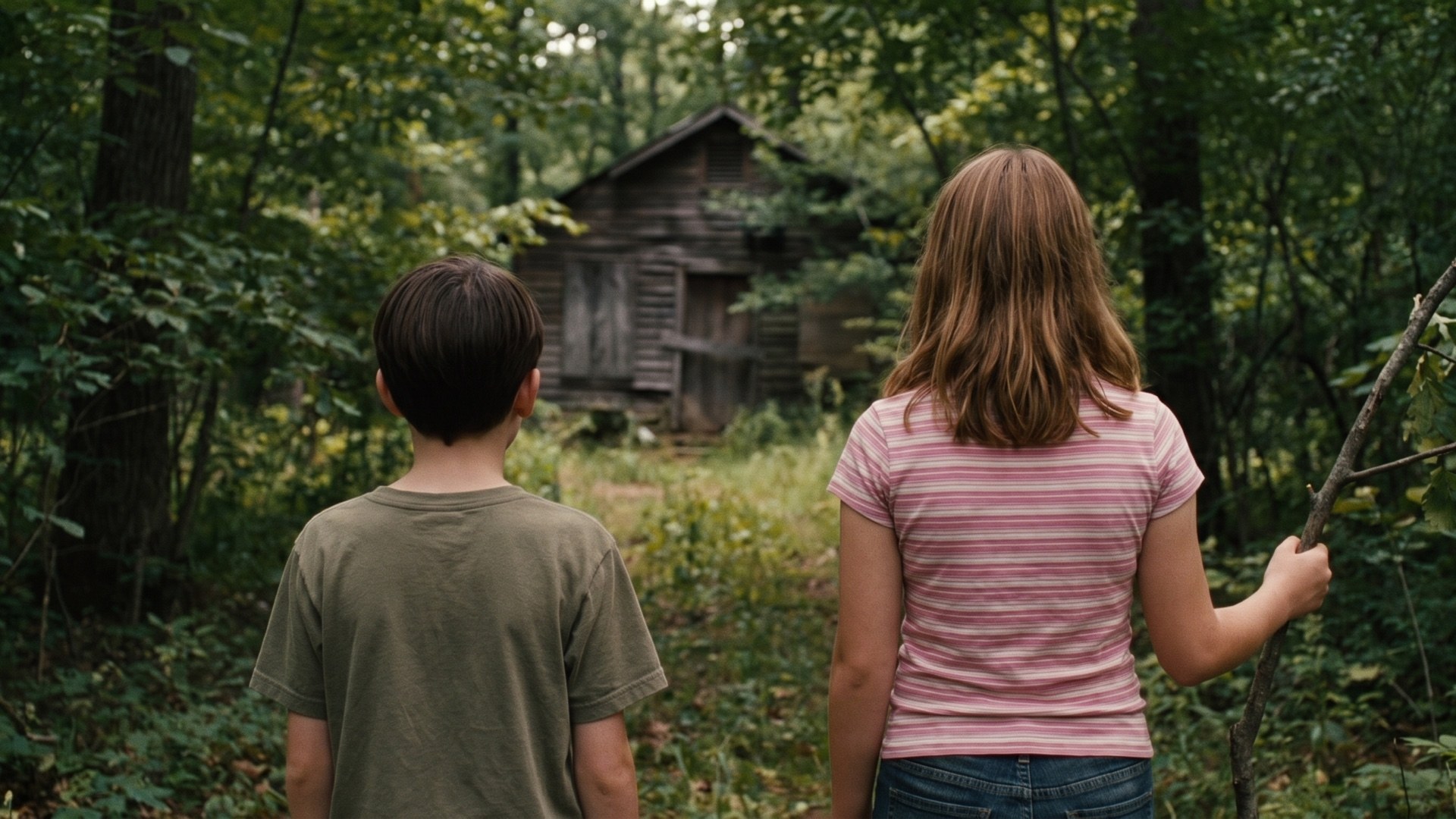
He Read It Out Loud at Twelve. It Stayed Nine Years.
*"We are Legion. And we will never leave."* That came out of a young man's mouth across a table from Bill Bean, a deliverance minister who had faced the worst of this work and never once flinched. The voice was not his. It was low and gravelled, scraping up from somewhere deeper than a throat. Bean looked into the young man's eyes, and something looked back. **And for the first time in all his years of this work, one instinct fired, cold and certain: walk away from this one.** To understand what was sitting across that table, you have to go back nine years, to a shack rotting in the Maryland woods, and a twelve-year-old about to walk inside. ## The shack in the woods It was the summer of 2003. John Drenner Jr. was twelve. Behind his grandmother's house in Odenton, Maryland, the woods ran back for acres, and one afternoon he and his older sister pushed in deeper than they ever had. Then the trees opened on a building that had no business being there. A shack, boarded and sagging, half swallowed by the brush, the wood gone black with rot. They both stopped. The same thought hit them in the same second: do not go near it. His sister would not take another step. John went in alone, to be the brave one. Inside, the air was still and sour. In the far corner, under a skin of grey dust, lay a book. Stamped on its cover was a cross, hanging upside down. He picked it up and opened it. The pages were crowded with words he had never been taught. But he was twelve and curious, so he sounded them out. One at a time. Out loud. Into the empty room. On the last word, something clamped his chest shut like a fist. The air went cold. He could not pull a breath. He threw the book down and ran, and behind him, back in the woods, rose a whisper he could not make out, from no one he could see. He knew it in his body. Whatever had been in that room was following him home. ## The devil's church His sister heard him that first night, through the bedroom wall. He was talking: the quiet back-and-forth of a kid with an imaginary friend. Question, answer, question, answer. Except no one else was in that room. Then it stopped, and the silence was worse than the voice. She pushed open his door. Her little brother was sitting bolt upright in the dark, staring, and his nose had begun to bleed. No one near him. Nothing in the room touching him. The people who lived near those woods had a name for that shack. **They called it the devil's church.** Satanic rituals had been done there, they said, and whoever went poking around it came back wrong. Nobody had told any of this to a twelve-year-old boy. ## Seven feet of it Back home in Pasadena, night after night, it worked its way out of the walls. First the scratching, slow and patient. Then a fist, pounding right next to him. Then the bed itself, shaking so violently it felt like an earthquake. And one night it stopped hiding. It stood in his room, seven or eight feet of it, black straight through and shaped like a man, with nothing at all in its eyes. It did not lunge. It did not speak. It stood there, and then it was gone. It came back the next night. And the next. His mother trusted what she could see and touch, and nothing one inch past it. The paranormal, as far as she was concerned, was about as real as the Easter Bunny. She took him to a psychologist. The verdict came back tidy: night terrors, a prescription, he would grow out of it. So John learned to sleep with the blanket pulled over his head. It did not keep the thing out. It meant that when it came, he would not have to see it. ## A crucifix in his room His grandmother was the only one who did not reach for a diagnosis. When he finally told her the truth, that a man was tormenting him every night and would not stop, she believed him on the spot. She was a religious woman who read the children the Bible, and she hung crucifixes in his room. And the thing came anyway. Bigger now, and furious. **Whatever the crosses were meant to do, they had done the opposite. They had enraged it.** John lay there, boxed in by holy objects, and understood the whole of it at once: nothing in that house, and no one in his family, could make this stop. So he stopped telling them. He shut every one of them out, his mother, his sister, his grandmother, and he carried it alone. ## The board By his teens John had quit expecting anyone to believe him. But his friends never called him crazy. So one night they set a spirit board on the table and tried to reach the thing themselves, to find out what it wanted and make it leave him alone. Nothing. The planchette sat dead under their hands. Then one of them jerked back. Something had grabbed his leg under the table. Now they had all felt it. For one second John almost felt relief. He was not insane, and they knew it too. Then the weight dropped onto his chest, and he asked it who it was. The answer came up through his whole body, deep and gravelled: > We are Legion. And we will never leave. Then it lunged. He could feel its breath on his face. Something closed around his throat and squeezed, and no one came to help him. They had opened that board to send it away. Instead they had pulled the door wide open. Later, John looked up the upside-down cross from the book in the shack and found what it was: a symbol used by devil worshippers. It all landed on him at once. The thing had latched onto him in that room years ago. **It had never come to haunt him. It had come for him.** ## Nineteen, and living alone By nineteen he was living on his own in Glen Burnie. The visions and the voices came every night, with no end in sight. He had stopped believing it would ever end. As far as he could see, he would carry it for the rest of his life. Then, a girl. Mary. Green eyes, and a way of looking at him that pushed the dark back for the first time in years. After a year together they moved in. He told her none of it, certain that the day she found out, she would decide he was crazy and leave. Mary began to feel it anyway. Being watched in an empty apartment. Something breathing behind her, and nothing there when she turned. And John was changing in front of her: sweet and loving one minute, snapping at her the next, his eyes gone black. > It wasn't my John. One night, alone in the dark while John worked a night shift, she turned on her phone. Full battery. It died in her hand. And in the dark that came down over the room, the figure was face to face with her. He finally told Mary everything. She did not run. She said what no one else ever had: *we'll work on this together.* It was Mary who said he needed help from a higher power. So the two of them went looking for one. **And church after church turned them away.** They would not touch it. They would not deal with it. ## February 2012 In February 2012, a friend put John in touch with Bill Bean, a deliverance minister. By then John was willing to try anything. Bean took one look at him and said what no doctor and no church ever had. He could see the thing behind John's eyes. It had attached to him when he was a boy, and now it was close to taking him over for good. Nine years it had worked at this. Even Bean felt the warning rise up in him again: *don't do it.* He did it anyway. John forced himself to take Bean's hands, and Bean locked on and would not let go. The instant the prayer began, the thing lashed out. The weight came slamming down on John's chest, heavier than the woods, heavier than the bedroom, heavier than any night of the nine years. John's own body turned against him. Then it came up his throat: the same deep, gravelled voice from the spirit board, snarling through John's own mouth. Bean did not flinch. He pressed in closer, gripped harder, and commanded it out. For one second John's real voice broke the surface, and then it was buried again. Two voices fought for the same mouth. Then Bean spoke straight past it, to the real John buried underneath. > Do you renounce it? And John's own voice broke all the way through, and held. > Yes. I do. > I cast you out. And the thing that called itself Legion, the thing that swore it would never leave, left. ## "I got my John back" John opened his eyes and nine years of weight was simply gone, lifted clean off him. He would call it the most amazing feeling of his life. Mary knew before he said a word. > I got my John back. He went back to his sister, the one who had heard it through the wall when he was twelve. Back to his mother, the skeptic, who to this day cannot explain a single thing that happened to her son. All she knows is that it is gone, and he is free. And John made his choice: to go back down into the dark after other people and pull them out of the same thing that so nearly kept him. He went to work beside Bill Bean. ## Who is on the record John Drenner Jr., his sister, his mother, Mary and Bill Bean told this on camera for *A Haunting*, season 7, episode 6, "Devil Inside Me," first aired in 2014. Two years later John told it again in his own words, to his hometown paper in [the Pasadena Voice's October 2016 interview, "Pasadena Man Recalls His Terrifying Battle With Demons"](https://pasadenavoice.com/stories/pasadena-man-recalls-his-terrifying-battle-with-demons,13145), and on camera in [a 2016 convention interview about his episode of A Haunting](https://www.youtube.com/watch?v=Sr-MeaPVsUs). To the paper, he described the moment he asked the thing what it was: > And it said, 'We are Legion. You belong to us.' Bill Bean, to the same paper, on the first time he met him: > I felt tremendous hatred and hostility toward me, and he hadn't said a word to me yet. And John's last word to the paper was for anyone living with something like this: > I want people to realize that there is help out there. Don't give up. Reach out and get help.
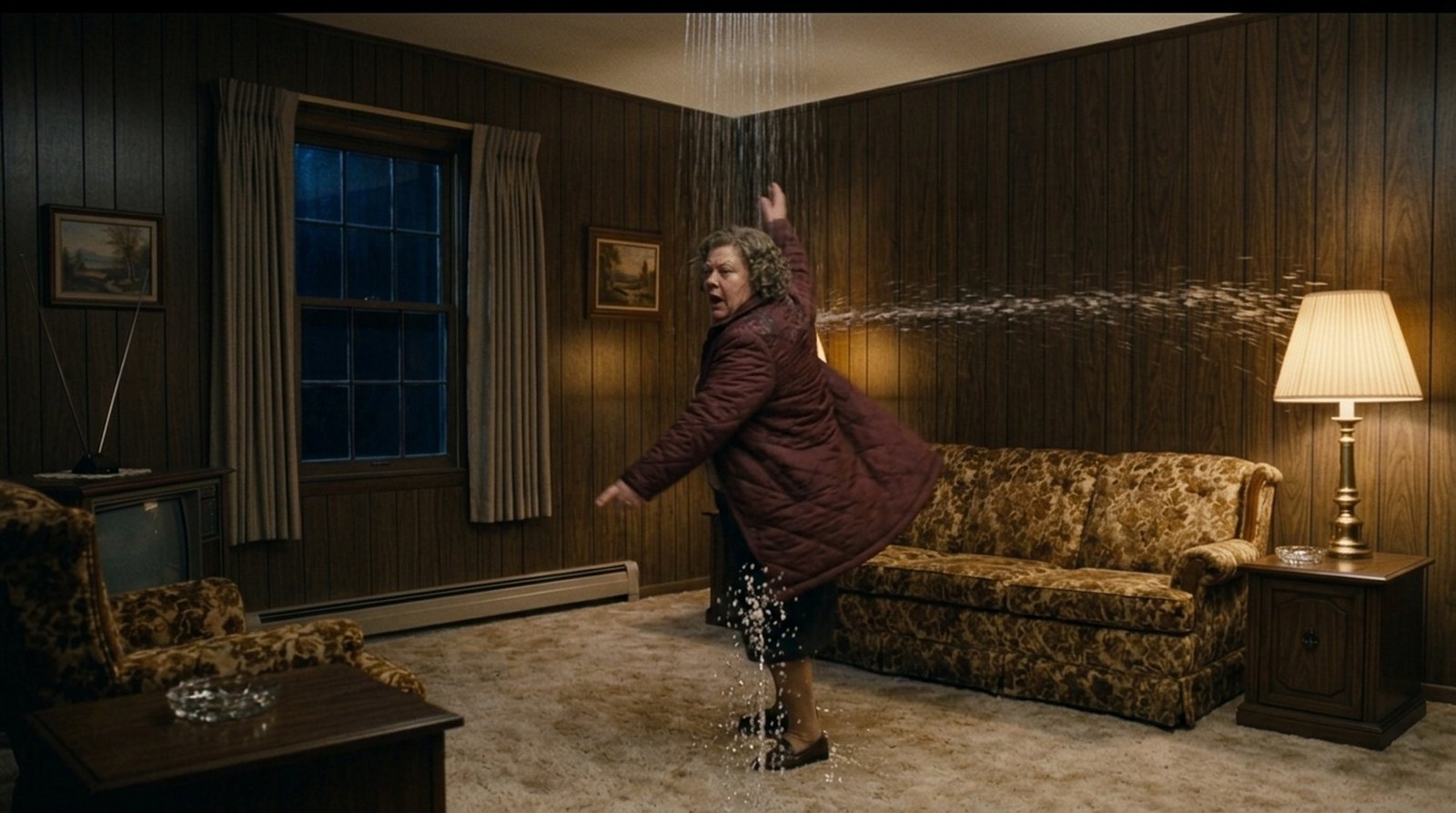
Police Watched It Rain Inside a House. Then the Chief Ordered Them to Keep Quiet.
Sworn police officers went on the record. They watched water rise up out of a dry floor and fly sideways through a living room. In February of 1983, in Stroudsburg, Pennsylvania, it rained inside a house. Not a leak. Rain, falling in a living room, out of the air, for two days. The family who lived there saw it. Their landlord saw it. The woman who ran the restaurant across the street saw it. Police officers walked in the front door and were soaked two steps inside it. **And when the chief of police stood in that living room and was pelted with it himself, he called it a plumbing problem.** Then he ordered his men to file no report and never speak of it again. ## The man it was falling on Don Decker was in his early twenties. A quiet kid who fell in with the wrong people, doing a few months in the county jail for receiving stolen property. Then his grandfather died, and the jail granted him a weekend out for the funeral. He did not want to go, and nobody in that family knew why. From the time Don was seven years old, his grandfather beat him, hurt him. It went on for years, and Don never told a soul. So he stood at that funeral and listened to the family talk about what a wonderful man they had buried. What he felt was relief. The evil was gone. He thought everything would change now. He was glad his grandfather was dead, and he had to hide it. His mother would not take him. Friends did. Bob and Jeannie Kieffer told him to stay as long as he liked. ## The face in the window Saturday evening, Don went upstairs to wash his hands for supper. And the room changed. The air went out of it like a vacuum, and it turned very, very cold. Something was on him. He could not see it, and he could not get it off. Then he looked at the window. There was a face in it. An old man, wearing a crown. Don looked down at his arm. Three scratches ran down it, side by side, blood beading at the ends. He came down the stairs white as a sheet. Bob saw the blood and asked what he had done to himself. > I didn't do it, Bob. There's something up there, I swear to God. There's a face in the window staring at me. ## It starts raining indoors Then the living room went cold. The same cold. Water started running down the walls. Then drops began falling out of the middle of the air. A few, then more, then it was raining in the house. And there were no water lines in that end of the house. The plumbing was all in the back. It did not fall the way water falls. It came down from the ceiling, sideways out of the wall, and up out of the floor. Catch a drop and rub it between your fingers and it was not like water. It was sticky, tacky. Some left an oily smudge where they struck. Bob called his landlord and would not say why. Ron Van Why and his wife Romayne watched water come up out of that floor and rise. No leak. No condensation. It had not rained outside in days. ## The police walk in A Stroudsburg police officer named John Baujan picked up when Bob called the station. > Bob, this is the police station, not the water department. > I just need you to trust me. Baujan walked into that living room and had it in about a second. Droplets lifting off the floor, going up, defying gravity. He and Bob were standing a few feet apart, face to face, and a single big drop formed in the air between them. It did not fall. It flew, flat and level, across the living room, through the dining room, out into the dark of the kitchen. Baujan's partner would not come in. He had to be talked through the front door. Two steps inside and he was pelted, soaked through. And the strangest thing of all: it was only that one room. Step into the dining room and it was bone dry. And the second the officers were out of the house, the rain in the house stopped. The landlord and his wife were still standing in it. The officers left, and it left. ## The crucifix that burned him Pam Scrofano owned the restaurant across the street. That night it started raining inside it, over the tables, into the food. She had been watching Don all day. Glassy. Looking at you without seeing you. She kept a crucifix by the cash register. She picked it up and touched it to his skin. **It burned him.** The skin blackened where it touched. That crucifix had been lying on a counter. It was not hot. And she said it out loud, in front of everybody. > This boy is possessed. You need a priest. ## The chief That night, the officers brought their chief. The water came at him the same as it came at everyone else, and it soaked him the same. And he called it a plumbing problem. He ordered his men out. He ordered them to file no report. He ordered them never to speak of it again. ## Three officers break the order Three veteran officers drove back to that house the next day, against their chief's direct order. Men with decades on the job who could not leave it alone. They were standing in the kitchen when the pots started rattling on the stove. And Don came off the floor. Lifted, and thrown across the room. One of them said it was like watching a man get hit by a bus. Don felt it over his whole body at once. > I'm a big guy. It made me feel like a newborn. Three fresh claw marks stood up on his neck, welling blood. And scratched into his arm, where the first three had been, was the shape of a crown. He did not know whose it was. He did not know why. One of the men who watched it had been a cop for forty years. > There's always an explanation when something happens. You investigate, you come up with something. This is why it happened. This case here, there is no explanation. Romayne had already said to his face what nobody else would. *You're doing this. You made it rain here. You made it rain at Pam's. Make it stop.* They had tried everything on him by then. At one point, a bag over his head, in case he was somehow spitting it. The water kept coming. And that was the worst of it. Don had started to believe her. > They lived in that house for years and nothing ever happened. That's when I started realizing it was me. ## Every church in town said no Every Catholic priest and every Protestant minister in Stroudsburg was called, and every one of them said no. One person said yes. An evangelical preacher. A woman. The next night, she knelt on that living room floor, prayed over him, and read out loud from the Bible. The rain stopped falling at random and concentrated on her. Pelting her. Harder the longer she read. She kept reading, and Don, curled on the floor, convulsing, went quiet. The feeling of the whole house changed. By the time she finished praying, the water was gone. Everybody in that house believed it was over. Don knew it was not. > I knew whatever it was, it was still inside of me. ## Cell block, maximum security A county jail took Don Decker back when his funeral furlough ended, and within days there was water in his cell. Moving horizontally. Moving vertically. Climbing the walls. His cellmate screamed for the guards to get him out. Not out of the water. Away from Don. So they moved him to a maximum security cell on his own. Concrete floor, concrete walls, locked door. And sitting in there alone, Don had a thought. Not a prayer. Just a thought. *I wish it would rain in here.* And water came up out of the concrete floor. All weekend this thing had hunted him, cut him, frozen him, thrown him across a room in front of police officers. **Now it was offering itself to him.** > At that point, I thought I could do stuff. Then two guards came down to his cell and dared him to prove it. They had heard what he was saying he could do, and they did not believe it. If you can really control it, make it rain in the office on the other side of the jail. Through door after locked door. Don said, I'll try. That office was in a totally different area of the jail, behind numerous locked doors. Nothing Don could see from where he sat, and nothing he could get anywhere near. About eight that evening, Dave Keenhold was sitting alone in the administration area, writing reports. Nobody else in the room. An officer walked in and pointed at his chest. In the middle of his sternum, on a brand new shirt, a patch about four inches by two was soaked through with water. He never felt it happen. He was on the far side of a jail from Don Decker, behind locked doors. > It's just humanly impossible. The officer who dared him was badly frightened now. So was Keenhold. And Keenhold made the call: get the chaplain. ## The chaplain was told not to pray The jail chaplain, Reverend William Blackburn, found a meek, mild-mannered young man, and opened with a chaplain's weariness. > Son, don't you think it would be simpler if you stopped all this nonsense? You're making this up, aren't you? And Don's face changed. His whole manner changed. And a smell came into the room. Blackburn had met it before, in the room of a person dying of cancer. This was that, multiplied five times over. Evil. Foreboding. Don told him what the crosses had done. They put a cross around my neck and it burned. They put a rosary in my hand and it burned. Then he raised his hand, rubbed his fingers together, and said: > I have powers you don't. I can make it rain. And it started to rain. A fine, drenching mist filling a closed room in the middle of a county jail, soaking both men standing in it. > It was like the devil's rain. I was in the presence of evil. Blackburn said, I'm going to pray for you. Don said, I don't want you to pray for me. Blackburn said, I don't care whether you want me to or not. Prayer is my prerogative. The chaplain opened his Bible and read aloud, into rain that was falling indoors. The rain came harder. It drove at Don. It drove at Blackburn. It was falling on everything in that little room. **Everything except the Bible.** It was open in his hands in the middle of all of it, and the pages never got wet. > So help me. It was a frightening thing. The stench got thicker. Don's own words for it: *I smelled death.* Blackburn kept reading and kept praying. As much for himself, he admitted later, as for the man in front of him. ## One sentence The chaplain said one sentence. > I bind you in the name of Jesus Christ. The rain stopped. It did not taper off. It stopped. And something came into that room that both men could feel, and neither had another word for but peace. Don's eyes filled, and he said, thank you. And a chaplain and a prisoner stood in that little room and held onto each other and prayed. It never happened again. Not that night. Not that year. Not ever. ## Who is on the record The chief of police never moved off his account. Called to the house twice. Saw nothing unusual. *Sometimes what people believe happens and what actually happens are two different things.* The jail's warden waved the whole thing off. *Hearsay. Everything I've heard is hearsay.* The men at the top said nothing happened. The men who stood in the room said it did. **Ten of them put their names to it in public, and not one ever took it back.** And John Baujan, the young officer soaked two steps inside that front door, who drove back the next day against his chief's order, went on to run that police department. Ten years as chief. Don Decker never moved off his own answer for what came into that house. He said it was his grandfather. > He abused me when I was young. He got a chance to abuse me again. The witnesses tell this themselves, on camera, in [the Unsolved Mysteries case file on Don Decker](https://unsolved.com/gallery/don-decker/) and in *Paranormal Witness*, Season 1. Every claim in this film comes from what those people said happened to them.
He Bought the Demon House Over the Phone
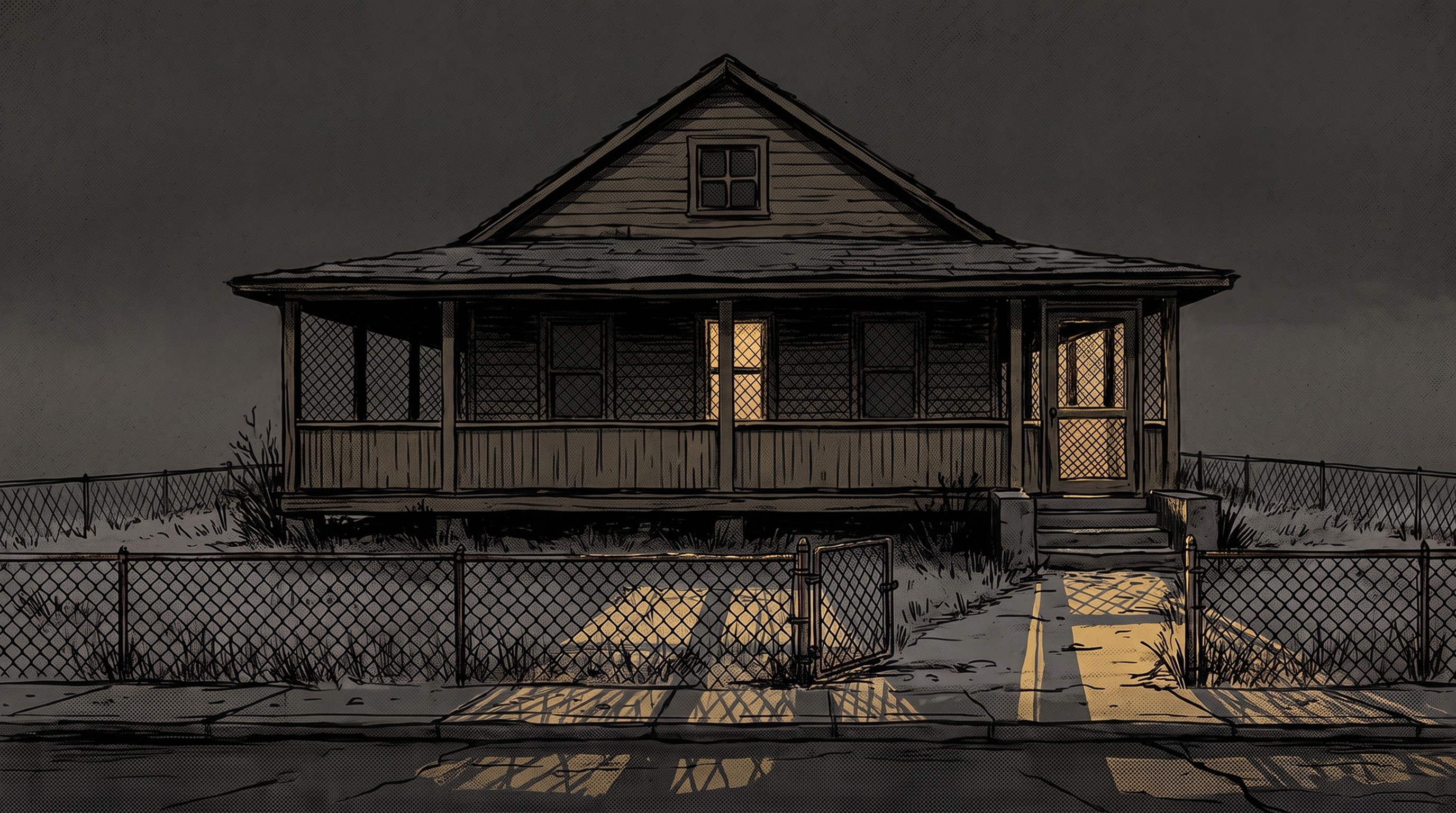
A man walks out of a house in Gary, Indiana, and his eyes never work properly again. It is permanent. Double vision, for the rest of his life. Nothing hit him. Nothing splashed him. He is not ill. There is just pressure behind both eyes, and an ache that will not go. Prism glasses on his face every single day — the kind of lens that bends the world back into one picture so a man can cross a room without putting a hand on the wall. Years later he is still wearing them. Surgeons have offered to operate. He has refused, and he has said why: corrective surgery on both eyes runs the risk of total blindness. And not one doctor has ever been able to tell him why a man's eyes come apart in the weeks after he spends time in one particular house. **He bought that house. Over the telephone. He had never once stood inside it.** He did not walk the rooms. He did not open a cupboard or put a foot on a stair or look at the basement. He owned it before he had seen it. People buy property sight unseen every day of the week. To flip it, to rent it out, to knock it down and sell the lot. Nobody does it with the one house in the country that a family has just run out of. ## The man who buys buildings nobody wants This is his trade, and he is good at it. He goes into the buildings the rest of us cross the road to get away from. Shut wards. Emptied asylums. Plywood screwed over the windows by somebody who meant it to stay screwed on. Places where, at some point, a person decided nobody should be inside any more, and locked the door, and left. He takes a crew in with him. Lights, cameras, sound, batteries, the whole apparatus. They stay the night, they film every hour of it, he cuts it together, and he sells it as a series. Men who do that work get used to the dark. That is the entire point of them. It is a job, with a routine, and gear that needs charging, and a way of talking to each other at three in the morning that keeps everyone steady. He has walked into hundreds of these buildings. He had never bought one. He had never wanted one. Then the story out of Gary broke. A small rented clapboard house on a corner. A family gone out of it. A priest called to the house, and three exorcisms after it. Police in the basement with a shovel, digging under the one patch of bare dirt in a floor that was concrete everywhere else, and lifting something out of the hole. That is the story told in full in [Part One — what the police actually saw](/watch/gary-indiana-demon-house). **And there is a thing he says happened before any of that, which he has never stopped saying.** A week before the story broke, he had a dream. He was a spirit among other spirits, showing them a trick — moving an object on a table without touching it, the thing he spends his working life asking spirits to do. Then he was in front of a door and could not control his body. The door opened. A twelve foot goat was standing on the other side of it, and black smoke came out of its mouth, and he was made to breathe it in. He woke up and his lungs hurt. And he knew it meant something. A week later the story out of Gary was on the news in every country there is. And he picked up a telephone, and he bought the house. He has been asked why, and the answer he gives is about himself, not about the house. He says part of him is drawn to the edge of that kind of chaos and danger. ## Everybody before this was sent. Nobody after it was. Now hold on to one thing, because it is the whole difference between everybody in this story so far and everybody in it from here. Everybody you met before this was sent. The caseworker was assigned the case. The officers were dispatched to the address. The priest was asked to come. The family signed a lease on a house they knew nothing whatsoever about. > **Not one person from here on was sent. Every one of them chose it, on purpose, knowing exactly what had happened in there.** ## The man brought in to explain it The first thing the new owner does is sensible. He brings in a man whose whole working life is one job — stand in the room, look at the thing, and say what it actually is. That is a draught. That is a joist. That is a pipe. That noise has a cause and here is the cause. An older man. Careful. Unexcitable. A lifetime of habits pointed at that one job and nothing else. He is the ballast. He is worth more than every camera in the van, because when a man like that says he cannot account for something, it means something. They get him inside the house. And within a short time the colour goes out of his face. He says he is dizzy. He says he thinks he is going to pass out. He is not frightened out of the building. **His body quits in it.** He cannot keep himself upright, and other men have to take hold of him and walk him out of that house. The one person brought there to explain the place cannot stay standing in it. Nothing gets explained. There is no draught to point at and no pipe to blame, because the man who was going to do the pointing is out on the street being held up by other men. He goes home. And a short time after he gets there his organs start shutting down. His prostate. His kidneys. His liver. His bladder. Not one at a time. Not a little here. Boom, like a cascade. He was in that house a few hours. He says that if he had stayed the night, he would be dead by now. He was in good health when he walked in. The doctors cannot tell him why any of it is happening. **And then, still inside, with the meters running, something comes over the man who brought him there.** He lunges at him. And then he catches himself, turns his body away, and makes himself walk out of the room, because he can feel what he is about to do to an older man he invited into that house. Behind him, on his own camera, the meter jumps again. That is the first time. He puts it down to tempers and a long shoot. He does not think much of it yet. He will. ## Four words nobody asked for They are already inside when it happens. Down the stairs, in the basement, with a camera running and a family standing around them in the dark. And it is the man who bought the house who says it. Standing in that basement, in front of a family who are still living with this, he tells them these things can get inside of you. That they do not just haunt a place. That they make you sick. And then four words nobody asked for. > **It's happened to me.** One of the family asks him the obvious thing back. Who helped you get that stuff out of you? The answer is one word. **A priest.** *And that's when you started wanting to do ghost hunting?* *Well, yeah. More or less. Investigating. That's what brought me here.* So understand what he has just told a room full of people. He is not guessing at any of this. He has had one of these things in him. It took a priest to get it out. And that is the thing that made him want to do this for a living. ## What was on the wall There is one more piece of footage out of that house, and nobody watches it for weeks. When they finally go through the tapes, they find something on the wall behind him. A black mass comes out of it. Not a shadow crossing the wall. **Out of the wall.** And then Doctor Taff turns and walks back down that hallway, and puts his hand flat on the wall. On the exact spot it came out of. And it takes him again where he stands. He does what a careful man does. He checks the boring answer first. Is that just the cameraman's hand. Then he says the sentence that should have ended the shoot. *We don't see it retract back into the wall.* And then, still just doing his job, he asks a question. *I don't know if that cameraman had any problems after this shoot.* ## Eight days behind a door The man who walks into abandoned asylums for a living cannot get off a bed. It starts as pain driving through both temples. It does not lift, and it does not lift, and he cannot stand up. **He stays in that room for eight days.** Eight days is not a headache. Crew on the clock. Gear hired by the week. Grown men sitting in a corridor, waiting on one man to open one door. And for eight days he does not open it. He is not sending word out. He is not on a phone. He is a man alone in a room with pain going through his head, for a week and a day. When he finally does, the people who have worked beside him for years say the man who came out is not the man who went in. Emotional first. Weeping, at nothing, at the wrong moments, in front of people he has never wept in front of. Then past that. Aggressive. He goes at one of his own crew. Somebody he hired. Somebody he has slept in bad buildings beside. **And he has no memory of it. Not a flash of it. Nothing.** They keep cameras running in the hallways, because they always do. So it is on the surveillance, and he sits and watches himself do a thing he cannot remember doing. Not a story told about him. Him. In a hallway. Going at a man who works for him. The crew fill in the rest afterwards, because he has to be told. *You attacked him. You were shouting at him — get out, get out. And then you rushed him.* He does it twice. He remembers neither time. The word he reaches for afterwards is not a supernatural one. He calls it a **contagion**. The house was a disease, and everybody who went near it got exposed. And then, with the cameraman they found on that basement floor already sent home — the men around him saying he is not himself any more — he does the thing that is hardest to explain. He has the last sheet of plywood screwed onto the front door with himself sealed inside the house, alone, overnight, to let whatever is in there take its best shot at him. Before they screw it on, he says it out loud. *I know this sounds stupid. But the investigator inside of me wants to experience it.* ## The ones who never chose any of it He is not the only one it did this to. And the rest of them never chose any of it. Three people went into that house before he had ever heard of it. A police captain with more than three decades on, sent there to prove the family were lying. A child services investigator whose whole career was children who had been burned and beaten. And a priest who had never performed an exorcism in his life, and was asked to perform three. Here is what it cost them. The captain gave his account sitting inside that building, in a chair, in daylight. And in all the time he was tied to that address he would not stay in it after dark. Not once. He never gave anybody a reason. Two days after he sat in that chair and told it, he came out of a restaurant onto ice. Men go down on ice constantly — backwards, arms out, onto a hip. He somersaulted. Came down on his head. Out cold for about a minute, and awake in a hospital, bleeding. More than thirty years of police work. They sent him to prove a lie. Four words. **I am a believer.** The investigator would not go back into that house. Somebody else had to walk in for her. The priest was thrown off his bicycle the day before he was due back for the second rite. When somebody looked at the bicycle after, the seat was turned forty five degrees. A bicycle seat does not move. It is a bolt through a clamp. It takes a tool and it takes force. He got back on it, and he went and did the rite. And the men who work those streets every shift — Gary police officers, saying out loud that they would not walk through the door of that address. One of them put it plainly. *I believe in that stuff, and that stuff might follow me home.* ## Two days Not one of those four picked that house. Which brings this to somebody who never had to go near it at all, and went anyway. She had lived in that house before the family who ran out of it ever saw the place. She was a child when she lived there. She was grown by the time any of this happened, and she agreed to walk back into it with him. She goes in. She stands in the rooms she was small in. The stairs, the front room, the doorways she last saw from a child's height. Then she goes home. For two days, nothing happens. Two completely ordinary days. And then she is in a hospital, badly hurt. While the staff are working on her, somebody sees her back. There is a number cut into the skin of it. **A six.** Not scratched. Cut. And it is on her back — which is the one part of a person that they cannot see, cannot easily reach, and cannot do neatly. She does not remember the six. Nobody can tell her how it got there. Two days before this, she was standing on a staircase looking at the house she grew up in. Two days. The night she was hurt, one of the crew walks off the production. Not notice. Not a conversation about it at the end of the week. That night. And he does not come back. ## Two thousand miles away Two thousand miles away, in Reno, Nevada, there is a woman who never once goes near that house. She and her husband are not crew. They are a couple from Reno who became the show's go-to specialists over four seasons and nine appearances — brought in, put in the building, and asked to do the one thing they were known for. Which was standing in empty rooms with a recorder, reaching for what she believed were the voices of the dead. She hears what happened to the young woman with the number cut into her back. And she decides to reach for the thing in that basement in Gary from exactly where she is standing. No car. No address. No trip to Indiana. Two thousand miles, and she reaches for it anyway. She makes the attempt. Months later, her husband killed her, and then himself. That is a domestic homicide. It has a man who did it, and [a documented history of domestic abuse behind it](https://www.rgj.com/story/news/2015/09/23/paranormal-investigators-killed-had-domestic-abuse-history/72717600/). They had a daughter. She is alive. ## Three years, and then the machine The film about the house takes him three years. Understand what that means. He owns the building outright. He holds the deed and he holds the key. There is no permission to chase, no owner to talk round, no window of access to book. He can let himself in on a Tuesday afternoon any week he likes. Three years. He says the case messed him up. He says the film is cursed. Near the end of his own film he stops and counts it out. He calls it the toll the house has taken on nearly everyone who ever went in. The caseworker who moved away and went into therapy. A second case manager, burned and broken up off a motorcycle not long after being in the house. A home inspector with a cancer diagnosis. The priest off his bicycle. The captain on the ice. The young woman. His own cameraman. A police chief saying something came back with him, and he does not want it back. And then [his eyes](https://dailydead.com/interview-zak-bagans-on-his-experiences-in-the-demon-house/). Then he does the thing that nobody in that business expects. He does not keep it. He does not sell it on. He does not board it up and sit on it. **In twenty sixteen he has it torn to the ground.** The screened porch, where the flies came back every winter on frozen ground. The staircase with the door at the top of it, that the footsteps came up. The front room where a grandmother sat at three in the morning and watched the shape of a man cross it, and cross it, and cross it again. The basement. The concrete. The dirt underneath the concrete, and the hole they dug in it. There is no negotiation in a demolition. It is one machine, and one afternoon, and then it is a lot with nothing on it. He could have gone on making money out of that house for as long as he owned it. Another season shot in it. Nights sold to people who would have paid anything to be locked inside it. Tours at the door, in the dark, every weekend of the year, forever. He says he wanted it destroyed so that nobody else could be in there any more. He walked away from all of that money, and he put the house on the ground. There is no house at that address now. No porch. No staircase. No front room. No basement, and no floor laid over the dirt. And the family who were in that house before any of these people arrived — the mother is alive, she is well clear of all of it, she has asked to be left alone, and she is. He kept pieces of it. Boards. Fittings. Part of the stairs. Part of a doorway. Nobody has stood inside those walls since. What is left of them is behind glass in his own museum in Las Vegas, in a case with a light on it.
The Gary Indiana Demon House: What Police Actually Saw
Five people stood in a small examination room in a hospital in Gary, Indiana, and watched something happen that took about four seconds. One of them was Valerie Washington. She had spent her whole career walking into the worst houses in Indiana — burns, bruises, cupboards with locks on the outside — and none of it had ever made her quit. She was in that room to write down what she saw. Four seconds in that room, and she walked out and never took another case. She left the job. She left the state. She did what you are supposed to do. She sat down in front of a psychiatrist and told him what she had seen with her own eyes. And he told her that she was the one who needed help. This is what she saw, and this is what was living in the house that family had rented. **It started with flies.** Late in 2011, a woman moved into a rented house on a small street in Gary with her mother and her three children. Nobody fell in love with this house. It was not a dream and it was not a bargain. There is no part of this story where somebody says it felt wrong. It was a house they could get, and they took it because that is what you do when you need somewhere to live. It had a basement. Concrete floor, poured flat, wall to wall, right out to the edges. Nobody in that family had any reason to look at that floor. In December the grandmother walked out onto the screened porch and the porch was black. Not a few flies. Not a cluster on the window in the sun. A covering — on the boards, on the screens, on the sill, thick enough that the grain of the wood was gone underneath them. It was December in northern Indiana. The ground outside was frozen solid. There was nothing out there for a fly to eat and nothing for a fly to hatch from. So they killed them. Rolled-up paper, a swatter, then a broom, sweeping them into a pan, and the pan filled, and they emptied it and filled it again. The next day the porch was black again. Every day, the same porch. Always that porch — never the kitchen, never the bedrooms. One room in that house, and the flies came back to it like it belonged to them. Here is what a family actually does, and it is the reason nobody outside a house like this ever understands it. They talk themselves out of it. It's an old house. Something has died inside a wall. There's a nest in the eaves and it'll be gone by spring. Nobody ever found a nest. Nobody ever found anything dead in a wall. And the flies went on all winter. Then, in the middle of the night with everybody in bed, somebody came up the basement stairs. Heavy. Wooden treads, one at a time, the way a grown man in boots comes up a staircase. You could count them. And then the last one, and then the sound of the basement door. They got up. Everybody was where they were supposed to be. There was nobody on the stairs and nobody in the basement. So they started locking the basement door. And the basement door kept opening. Then one night the grandmother woke up in the front room, and there was a man in the house. He was a shape in the dark, and he was pacing — across the living room, turn, back across the living room. Not searching for anything. Not going anywhere. Walking the way a man walks in a room he already knows. She did not scream and she did not run. She lay there with her eyes open and she watched him do it, because at three in the morning with children asleep down the hall, that is what your body decides for you. In the morning there were wet boot prints on the floor. Big ones. From something that had been outside. After that the whole household was in bed by eight o'clock at night. All of them, the grandmother too. Not because they were tired — because they had worked out the pattern. If everybody was asleep, the house stayed quiet. If anybody was still up at eleven, it started. Things going across rooms with nobody near them. A room with the heat running, cold enough that you could see your own breath in it. And the children in the dark, saying that something had touched them. A haunting does not make a family scream. It makes a family negotiate. You do not run — you make a rule. Everybody in bed by eight, and if we all do it right we get to keep the house and the school and the beds and the address, and nothing happens tonight. Terror turns into a schedule, and a schedule feels like control. It held for about six weeks. Then somebody the family loved died, and for one night the rule went out of the window. Two in the morning, a house full of people sitting up together the way people do. Nobody asleep. And the mother was in her own mother's bedroom when she started screaming. What the mother and the grandmother both say is this. One of the children was up off the bed. In the air, above it. Unconscious. Not thrashing, not making a sound. Out cold, and off the mattress, with nothing underneath. So the adults in that house did the only thing they could think of. They crowded around that bed, all of them, and they prayed. The grandmother's own word for what she felt in that room is *terrified*. Eventually the child came back down onto the bed. Nobody can tell you what ended it. Only that it ended. The child woke with no memory of any of it — did not know it had happened. And every single person who was visiting that house that night refused to ever come back to it. So the mother went and asked for help. Think about what that actually costs. It means sitting down in a chair, in daylight, across a desk from a man in a collar you have never met, and saying out loud with your own mouth that something walks around your living room at eleven at night and touches your children. And then it means watching his face while you say it. It changes. Not to laughter. Something worse than laughter. It goes polite. Then she got up and found another church and sat down in another chair and did it again. And then again. Not one church sent anybody to that house. Eventually one of them answered her, and what it handed her was not a person. It was instructions. Clean the house with bleach and ammonia, then take oil and draw a cross on every door and every window. So she did it. All of it. Exactly. On her knees with a bucket, room by room, into the corners, until the whole house stank of it and her eyes were streaming. Then she went back through with the oil. Every door frame, every window sill. The front door, the back door, the basement door, the closets, the porch. She did not skip one opening in that house. Then she went and got her children — their hands, palms turned over, their feet, her thumb in the oil and a mark on each forehead, one at a time. She did not believe anything about bleach. She was not a woman with a system. She was doing exactly what she had been told, to the letter, by the only people in months who would tell her anything at all. And her children stood still and let her do it. It did not hold. By spring it was not the building any more. It was the children. What came out of their mouths — words a child that age does not have and has never heard. A look held a beat and a half too long across a kitchen at their own mother. So she stopped trying to protect the house and started trying to protect the kids, and she was not quiet about it. She said it in waiting rooms. She said it at the school. She said it to anybody who would sit still long enough to hear it. And somebody outside that family picked up a telephone and called the state. Not to report a haunting — to report that this mother was mentally ill and had coached three children into performing it. Then every rational door in the world opened at once, and every one of them opened away from her. All three children were examined by doctors. All three were healthy — no marks, no injuries, nothing on any of them. The mother was evaluated properly by people qualified to do it and was found completely sound of mind. Specialists sat and listened to her account and wrote down what they made of it. And somebody, officially, in writing, recommended that the house be checked for carbon monoxide. There is no villain anywhere in that building. Nobody is lazy and nobody is cruel. Every one of those people is competent, doing the job they were trained to do, correctly — and every single one of them arrives somewhere else. The way she said it herself was this. *I couldn't talk to them, so I talked to God.* And then, in a hospital, in front of staff, the youngest boy came up off the floor and into a wall with nobody within reach of him, and both boys started cursing at the doctor in voices that were not theirs. Now slow down, because this is the room. It is small. A chair. A sink. A door that opens inward. The kind of room you have sat in yourself, waiting, reading the poster on the wall about washing your hands. Five people in it. The grandmother. Two of the boys. And two people whose job that afternoon was to stand there and write down what they saw. The younger boy started to growl. Not a noise a child makes playing at monsters — low and continuous, with breath behind it, coming out of a child's chest and going on longer than a child's lungs should let it go on. His lips pulled back off his teeth and his eyes rolled up until there was nothing in them but white. The grandmother reached across and took the older boy's hand. Just reflex. The way you grab a child in a car park. And then a voice came out of the older boy. It was not a child's voice. It was deep, and it was underneath his own, and everybody in that room heard it. *It's time to die. I will kill you.* And then he grinned at them. Too wide. The wrong muscles pulling in the wrong places, further than a face is built to go. And he held it. And he held it. And he did not blink. Then he went backwards. He did not turn around. He went backwards, across the floor, with the grandmother's hand still locked in his — and his heel found the wall. And he kept going. Up it. Flat-footed, soles against the plaster, his body coming out over the room, and her arm rising up over her own head because neither of them would let go. Onto the ceiling. Over the top of her, and down the other side, and onto his feet. Then he walked over to the chair and sat down in it. Every adult in that room who was being paid to be in it got out of it. And minutes later the boy lifted his head and looked around him like somebody waking up in a room he does not remember lying down in. Here is the part that makes this thing impossible to kill. They went and found the doctor and they told him. And the doctor did not believe them. Of course he did not believe them. And then he asked the one question that could actually settle it. *Can he do it again?* So three grown professionals walked back into a hospital room and asked a small boy to walk up a wall. And he had no idea what they meant. Five minutes after doing it, he could not remember doing it. He tried, because adults were asking him to. He put his foot up on the wall and he pushed. His foot slid down. He tried again and it slid again. He could not do it. Somebody asked afterwards whether he had run at it — taken it at speed, the way a kid gets two steps up a wall on a dare, the way you would have to do it if it were a trick. No. He glided. That same afternoon the state took all three children. There is a form for that. It has printed reasons down the side and you check the one that applies. Somebody checked a box, and then underneath, in the space where you write what was actually going on, there is one sentence. *All the children were experiencing spiritual and emotional distress.* Read that back to yourself. That is the state of Indiana, in its own paperwork, on the afternoon it took three children out of their mother's house. And land on her for a second. She went to the churches and the churches went polite. She went to the hospital and the hospital wrote a word beside her name. Then the state came. And now she is standing in that house at eight o'clock at night with no children in it. Then a telephone rang in a rectory in Merrillville, Indiana, and a priest picked it up. It was the hospital. *We need an exorcism.* People had just run out of a room because they watched a boy walk backwards up a wall. The man who took that call was not an exorcist. He had never done one. It was not what he did. He went anyway. He sat with that family for hours. He telephoned two men who do this work for a living and asked them what he was looking at. And he went hunting for the ordinary explanation, the way you are supposed to. Illness. Drafts. A family with a story to sell. A house with something wrong with the plumbing. He did not find it. And then he took out a crucifix and laid it on the mother, and she began to convulse. Right there in front of him, her body seizing and going and she could not stop it, and it was not a faint and it was not a fit, and nobody standing in that room could put a name to it. He told her straight out that she was possessed. She did not argue with him. She did not ask him what he meant. She said two words. *I know.* Sit in that for a second. Five months. Flies on the porch since December. Boots on the stairs. Wet prints on her living room floor. Everybody in bed by eight. Bleach on her knees. Oil on her own children's foreheads. A word written beside her name by people with degrees on the wall. Three children taken out of her house in a single afternoon. And in five months not one single person had agreed with her. Then a stranger walks into the room, puts a piece of metal against her, and says out loud the thing she has been trying to get somebody — anybody — to say since winter. *I know.* He performed the small rite he was permitted to perform on his own. Afterwards the nightmares got worse, not better. So he typed it up. Six pages. Everything he had seen and everything he had checked and ruled out. He put his name at the bottom of it and sent it to his bishop. And the bishop said no. Meanwhile a police captain with more than three decades on the job — homicides, been shot at — had a theory, and it was a good theory. This family had made all of this up for money, and he was going to go over there and end it. Then his recorder died. Fresh batteries in it. Went in working, came out dead. Then another officer played back his own audio from inside that house, and there is a word on it. A whisper. *Hey.* Nobody said it. Then his police radio quit on him on the drive home. Then his garage door would not open, and the power was on the whole way up and down his street. Then the driver's seat of his own car slid backwards and forwards with him sitting in it. He took the car to a mechanic and the mechanic told him the seat motor was broken. He went and got the boring answer himself — and then he stood there and told people about the whole thing anyway. Back at the house, oil was running out along the slats of the blinds in an upstairs room and pooling on the sill underneath them. So they photographed it. Then they took cloths and wiped every slat, both sides, top to bottom, until the whole thing was dry. Then they put every person out of that room and shut the door. And then somebody did something clever: they wedged a cotton swab into the door frame, so that the door could not be opened by anybody without that swab dropping on the floor. Forty minutes later they came back. The swab was exactly where they had left it, and the blinds were running again. They took flashlights outside and went up the outside of that wall looking for a pipe, a vent, a seam, a leak — anything above that window that could put oil on the inside of it. There was nothing. Then they went down into the basement. In the big room down there, standing on the concrete, was a small altar somebody had built by hand. Religious statues stood up in a row, candles, a Bible, and salt poured out in lines along the inside walls, running the whole length of that basement. The grandmother told them plainly whose it was. Theirs. They had built it themselves, to keep the demons off. Which is the bleach and the oil, one floor down. It is the same woman doing the same arithmetic. No church would send a man to that house. The hospital wrote a word next to her daughter's name. The state took the children. So an elderly woman went down into her own basement with what she could get her hands on — statues, wax, a Bible and a box of salt — and built the only thing she could think to build. That is the second time this family had to invent a defence on their own, in the dark, with nobody coming. And then somebody looked at the floor. Concrete, poured flat, wall to wall, right out to the edges of that basement — except in one place. Underneath the wooden stairs there was a patch of bare dirt. And the question, once you have heard it, does not leave you alone. Why would somebody concrete an entire basement and leave the dirt under the stairs? So they dug it out. Four feet by three, and down. Men with shovels handing things up out of a hole, one at a time, and getting quieter as they go. A press-on fingernail, pink. A woman's underwear. A comb. Two children's socks with the bottoms cut off below the ankle. A heavy metal bar. And a red tin. The captain would say afterwards that four feet down there was a foil pan, sitting flat, with a candle standing up in it. More than three decades. Homicides. Shot at. And this is the man who has to stand there and put words to what came up out of that floor. His words: *We only assume, because we had no expertise, that this was a portal to hell.* Nine days after those six pages went to the bishop, a telephone rang at half past three in the afternoon. Permission — and it had not been typed. It was written by hand, in ink, at the foot of the last page of his own request. What happened in those nine days, nobody has ever said. Three rites, in his own church. The day before the second one he was thrown off his bicycle. He picked himself up off the road and looked at it, and the seat had turned forty-five degrees. His words: *What else can it do? I was baffled by it, and I wasn't going to let it stop me.* He got back on the bicycle and he went and did the second one. The children came home. Not to that house — a different house, in a different city, hours away. Their mother never spent another night on that street. Months later the same agency that took those children closed the file on them. The last thing written in it is one sentence. *They have not experienced any issues with demonic presences or spirits in the home.* They went home, and it did not follow them. She lives quietly now. She does not talk about it, and she does not want to be found. And the people who have sat with her since all say the same thing about her. That she is at peace. The family got out.
The Weekly
One letter a week, and nothing else.
What came across the beat, and what we made of it. No tracking, no selling, no noise — and you can leave whenever you like.
We ask for an address, never a card. Everything here is free, and the things that help a frightened person always will be.